The work is the only proof.
The work is the only proof. Everything else is a claim.
An agency can call itself premium, strategic, results-driven, and award-winning on the same page, and none of it costs anything to write. Adjectives are free. The reader knows this. They have read the same five adjectives on every competitor’s site, in the same order, under the same stock photo of a team laughing at a laptop. The words have been spent so many times they no longer buy anything.
A real piece of work is not free. Someone had to choose the paper stock, argue about the headline, kill the version the client loved, and ship the one that performed. You cannot fake the finished thing. You can only make it. So when an agency shows you the actual artifact, they are spending something the adjectives never could.
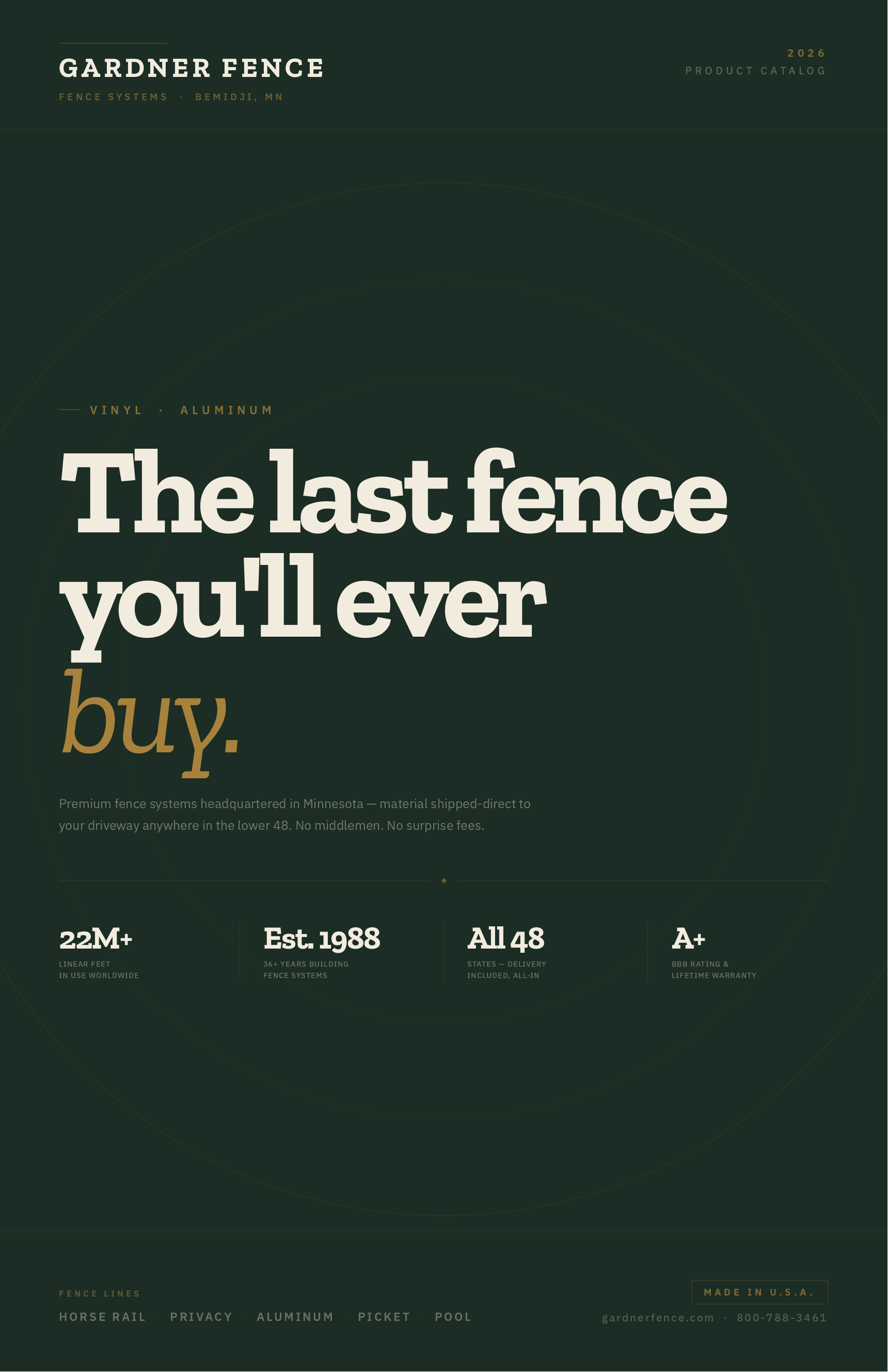
Look at the catalog above for a second. You now know more about how we work than any list of services could have told you. You can see the restraint. You can see what we think a product photo is for. You can see that we did not reach for a swoosh or a starburst or the word “quality” in a banner. That is a position, stated in the only language that cannot be faked — the finished object.
This is the whole case against the case study as most agencies write it. The standard case study is a story about the agency. It opens with a challenge, moves through an insight, and lands on a number. The number is usually a percentage with no denominator. Up 300 percent from what. The reader cannot check it, cannot feel it, and has read forty of them this week. A percentage is just another adjective wearing a math costume.
The artifact has no costume. It is the thing itself. Put the actual ad on the page and the reader does the evaluation you were trying to dofor them with your sentence. They look at it and decide, in about a second, whether the people who made it know what they are doing. That second is worth more than your whole paragraph.
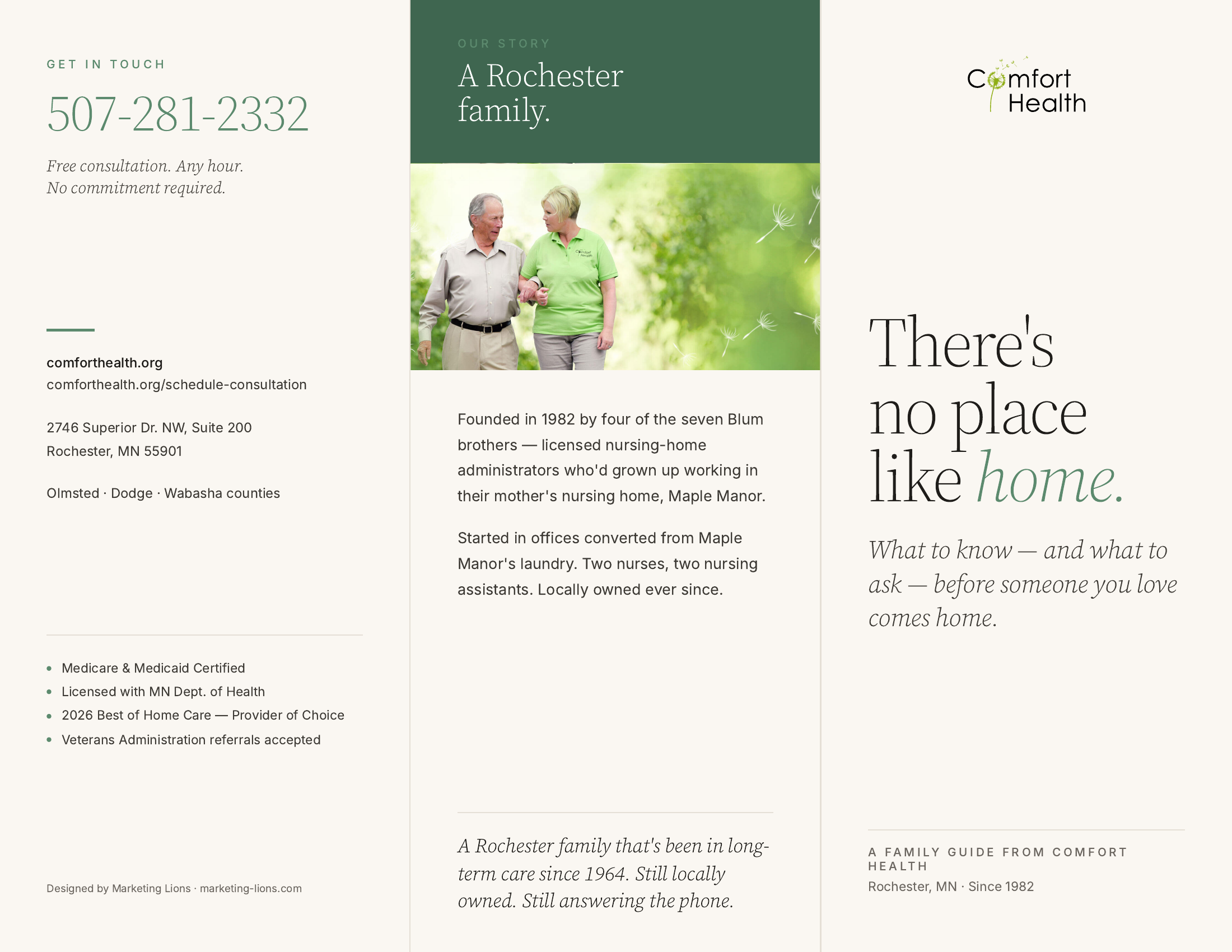
Notice what the brochure is notdoing. It is not shouting. It is not stacked with badges. The decision it is built for — moving a parent into someone else’s care — is one of the heaviest a person makes, and the piece carries that weight by getting quieter, not louder. We could have told you “we understand the emotional nuance of senior care.” Instead, here is the page. Read it. Decide whether we do.
That is the trade we make every time we choose to show instead of claim. Showing is slower. It requires the work to actually exist, to actually be good, and to survive being looked at by someone who did not make it. A claim survives anything. That is exactly why a claim is worth nothing and an artifact is worth the second it takes to judge.
There is a discipline cost to working this way. You cannot hide behind the deck. Every piece you put on the wall is a piece someone can point at and say, that one is weak. So you stop shipping the weak ones. The standard rises because it is visible. The restraint is not a style choice. It is what is left after you have thrown out everything that could not survive being seen.

The yard sign is not glamorous. No one wins an award for a yard sign. But it runs on a real lawn, in front of a real deck, in the exact neighborhood where the next three jobs are. It out-converts the clever campaign because it is standing next to the proof: the deck itself. The work selling the work. That is the whole pattern, compressed into a stake in the ground.
A claim asks you to trust the agency. An artifact asks you to trust your own eyes. Buyers have learned which one to believe.
This is why our journal does not run testimonials and our pages do not run logos in a trust bar. A logo strip says other people trusted us. The work says here is what that trust produced. One is hearsay. The other is evidence. We would rather hand you the evidence and let you reach the verdict the testimonial was trying to reach for you.
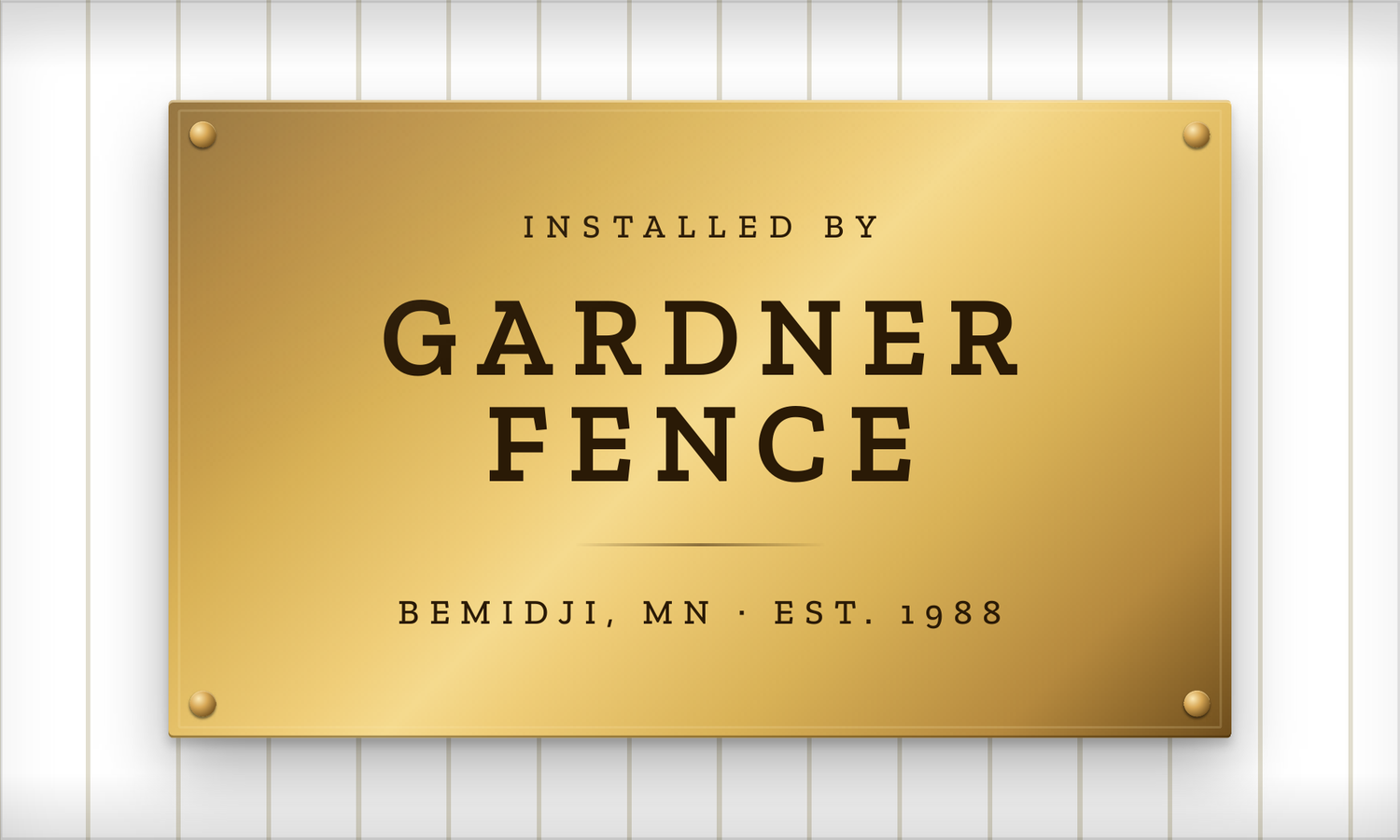
The plaque is two inches of metal. It will outlive every ad we ran for Gardner this year. Someone leaning on that gate in 2034 will run a thumb over the mark and form an opinion of the company without ever seeing a single thing we wrote. That is the standard the work is held to. Not whether it persuaded for a quarter, but whether it still holds up bolted to a fence with no caption underneath it.
So we have stopped arguing about whether we are good. The argument is unwinnable and boring, and the reader has heard both sides. We put the work on the page instead. If it is good, you can see it. If it is not, no adjective was ever going to save it.
Don’t take our word for it.
Look at the work.